No Small Feat

By Cynthia Aralu

Hi everyone! Here’s your reminder to pray the Rosary.

Today, I am going to share my journey towards obtaining my driver’s license in Alberta. It has been filled with setbacks, imperfections, and difficult moments. Yet through it all, I’m thankful that God sustained me, never let me go, and faithfully brought me to the other side.

It all began in 2023 with me studying for the knowledge test. It took me such a long time to go through the driving manual from front to back. Still, I failed the knowledge test on my first try and barely passed on my second attempt. By God’s grace, I managed to guess the last few questions correctly and scored 25 out of 30—the minimum passing mark. I was overjoyed. I had assumed I would fail again with only maybe one or two questions left, so this felt like a miracle. I want to preface this by saying that many people do pass on their first try—like my older brother, whose “really?” face I still remember, when he heard I had failed. I don’t think the knowledge test in Alberta is excessively difficult. It was just challenging for me.

The next hurdle was learning to drive on the road. I enrolled in a driving school’s program that included an online course and road course package. Completing the program would earn me a certificate that could help reduce insurance costs and shorten the Class 5 GDL (probationary license) period from two years to 18 months. Driving was tougher than I expected. Ten hours of instruction didn’t seem enough. My instructor suggested more practice, so I drove occasionally with my older brother and rarely with a friend who lent me his car. The driving school required me to meet a certain score on their evaluation sheet before issuing the certificate.

In late 2023, I paused lessons because of winter approaching and the thought of driving induced a lot of anxiety. But when spring or summer arrived in 2024, I reached out to the school, determined to earn the certificate. I completed 18 hours of road training in total with the school before she declared me road-ready and issued the certificate, but I still didn’t feel confident. My heart would pound every time I sat behind the wheel. The criticisms I’d heard were loudest.

I took my first driving test using a registry car. Its analog accelerator gauge was unfamiliar, and its acceleration was jerky and the brakes required extra pressure than I was used to, so my nerves grew, and I missed a stop sign while entering a parking lot. We didn’t get on the highway. On my second attempt, I had the same tester. My anxiety was worse. He believed I should’ve paused for a vehicle with the right-of-way, but I proceeded, thinking I had enough space and time. I failed again. I don’t clearly remember the next four tests. At one point, I even considered taking herbal medicine to calm myself down but I don’t think I wanted to rely on that so, ultimately I decided to leave everything to God. I prayed a daily novena to Our Lady Undoer of Knots (although it is supposed to end at 9 days), even when I wasn’t driving. After I failed the 6th road test, which I’d felt God called me to go ahead and take, I took a break from testing in 2024. During this final test of 2024 (attempt #6), I sensed the anxious feeling quietly leave me while I drove. I realised that praying the Novena to Our Lady undoer of knots daily worked so I continued it.

Around Christmas time, I drove with my sister. Her presence felt calm, safe, and warm. I did not sense any anxiety in me or her. She let me know after the drive that I could drive, made small mistakes and I just needed more confidence.

In 2025, I resumed lessons with a different school. After a series of sessions, my instructor informed me that I could drive and he seemed almost guilty to take my money for more sessions. He recommended driving on my own with some support. I felt hesitant reaching out to him again, but I eventually trained with another instructor from the same school who helped me improve in areas I knew I struggled with.

In 2024, I had purchased prescription polarised sunglasses, and found out that driving in socks helped me control speed and steering better. But by 2025, I realised I could still manage with snug shoes even though wearing socks gave me better control, and I felt comfortable enough to not rely on the prescription polarized glasses. Most importantly, my heart no longer raced uncontrollably while driving, although a trace of apprehension lingered before the drive. So, I assumed I was calm while driving.

I failed my first road test this year (attempt #7) due to visual and spatial awareness challenges. I missed crucial road markings and misjudged the lane of an approaching car as I attempted a right turn. The tester applied the brakes. He allowed me to complete the test and I could surmise from the skills assessment I received that I would have passed if not for that mistake. His assessment gave me hope so, I rebooked another test about two weeks later, believing I could succeed.

I still didn’t wear my prescription polarised sunglasses. My plan was simple: if am unsure, I’d just let others go first. I wanted to drive in socks, since it had noticeably improved my speed and steering control during the earlier test. But during a lesson prior to my next attempt (#8), my instructor had noticed and insisted I wear shoes. Even though he was not present for my test, I didn’t want to be disobedient, and I wanted to honor him, so I complied. To be clear, I can drive with shoes. It’s just harder to sense the pressure I’m applying to the pedals due to low proprioception. That low sensory feedback means I could unintentionally speed—and in a test situation where everything is heightened, that is too risky. Speeding can happen in a heartbeat. So, it did on my second test. I went 40 in a 30 zone—an automatic fail. The tester let me finish the test and once again, from his assessment, I would have passed if not for that slip. I begged him to reconsider, pleading for mercy. But he refused, saying, “I cannot lie”. I was surprised by his wording. I hadn’t viewed my plea as asking him to lie—just asking for mercy.

I can’t say that I felt I had done something wrong for begging. I had even told my younger brother that maybe I should’ve begged during the first test this year (attempt #7), but I’d wanted to follow the process. Later that day, though, I reflected on the tester’s words. I had asked him for something that could compromise his integrity. And he’d declined. I felt terrible for asking, not because I intended deceit, but because I realized I had tempted him to sin. I genuinely believed mercy to be in the hands of the person who you plead your case with, and in this instance, it was this man. But, I suppose he is human and not God; and he has his responsibilities and I was placing the wrong request on him.

I felt a distrust start to creep in that God was not going to help me. Not even because He couldn’t, because He is God and He is all powerful, but because there must be a good from me failing that I cannot see or understand. I had prayed. I had faith. I worked hard (to the best of my ability), and yet I failed, even though I knew how to drive. It didn’t make sense. Life didn’t make sense. I felt kicked, beaten, and abandoned at the curbside. I felt truly defeated and I caught myself slipping back into old pattern of swearing as I spoke to my brother. It was like watching myself from the outside, stunned: I’m swearing. Why am I swearing?. By God’s grace, I stopped even though the pull was there to continue.

I considered taking a break from testing for a while. But my younger brother said “no”—firmly. He insisted I could drive and just needed to be careful. He hadn’t seen me drive, but he believed in me because minus one error I would have passed. He urged me to book another test right there at the registry. I sat on a bench close to registry, under the hot sun for a long time, until I finally went in. Later on, my sister echoed her encouragement. She worried I sounded defeated about the next test I had booked. But I couldn’t explain it. I didn’t understand. I couldn’t guarantee a different outcome. I gave thanks to God, but praying felt difficult. I felt sinful and like a failure in both my spiritual life and my earthly efforts. I felt abandoned by God and not helped by Him. Yet, I knew God had helped me because I remembered how I used to drive with my heart racing uncontrollably. And now I don’t. That change was real, even if I didn’t feel helped. I felt like nothing.

Before my first road test this year (attempt #7), I had prayed earnestly for God’s guidance—should I postpone or proceed? In the final moments leading up to the test, my prayers were answered. I received an unexpected opportunity to practice, and the weather shifted dramatically in my favor, contrary to the forecast. Even my Uber driver remarked on how beautiful the day was. I gave thanks to God out loud, taking it as a greenlight from Him to go forward. So, when I failed, I couldn’t help but wonder: Why would God tell me to go ahead if I was going to fail? I know it was definitely for good but I could not understand it. Maybe I thought I heard wrong but the answered prayers were so clear.

Prior to my second road test of this year (attempt #8), by God’s providence, I stumbled upon the story in Scripture where the Israelites (11 tribes), sought God’s guidance on whether to go to battle against the tribe of Benjamin (1 tribe). God told them to go, and they lost. Twice. It was only after they wept, fasted, offered sacrifice to God and returned to ask, not just whether they should fight, but whether they would triumph, that God assured them of victory. And they did. That story stayed with me and I decided to act like the Israelites: I fasted and prayed, seeking God’s voice not just for permission, but for outcome. During Mass, a passage was read about Jacob (Israel) wrestling with the God—a relentless grip for blessing—and leaving with a limp. That same day, my ball and socket joint had flared up and I limped slightly too, so, in my spirit, I concluded God had blessed me as well. I took it as a sign that I would pass. I can’t remember if anything else affirmed that conclusion, but I decided to have faith. So when I failed, my confusion came back, and I think I began to wonder if I’d been hearing my own voice all along and mistaking it for God’s voice. I questioned whether I had ever heard from God ever in my life. I questioned whether people deluded themselves when they said God spoke to them. I believe I concluded from scripture that God truly speaks to those He loves… or perhaps I concluded God speaks to those who truly love Him. Unclear at this point, but I think both are valid.

I went to confession the day after my 8th attempt. The priest told me that God’s message to me that day was the same one He gave to St. Paul: My grace is sufficient for you. St. Paul’s words came to me also: “I will boast all the more of my weakness”. He counselled me to trust in God’s grace and mercy, but I struggled to understand what it really meant to trust God’s mercy and grace, or what it meant to have faith or how to have faith. I questioned whether my faith was ever genuine because of my poor actions.

Daily, I ask God to interrupt my plans if they’re not aligned with His plan for me, and to move me into conformity with His plans. I’d heard someone online say this prayer, loved it and adopted it. In this time, I couldn’t help but wonder if this was just my prayer coming true. I felt a slight temptation to stop but I continued it because genuinely deep down, it is what I want even if my being revolts against it. 

I had been told by the priest at confession that the ability to do better is a gift from God and that I have it. So, in the six days leading up to attempt #9, I looked inward: what could I do better? I remembered my Apple Watch alerting me that my resting heart rate had hit 120 bpm before the previous test so, I’d removed it prior to the test to avoid distractions. I decided to check the data for the period I practiced, and my heart rate had climbed to 132 bpm. I think at the time I may have thought my baseline or lowest heart rate to be in the 50s, but I can say now that it got as low as 50 bpm on July 15th (a day before the test). So, I think it is safe to take that as a baseline. The thing is I never sensed any rise. In the past, I would hear my heart race uncontrollably but that stopped and I assumed I was calm, but the reading said otherwise. I realized my body had adapted to driving under pressure. However, the anxiety slipped into my feet, triggering unconscious sensory-seeking behavior to ground/regulate me: pressing harder on the accelerator (tactile/proprioceptive input) without noticing, due to low proprioception. I recalled all my reading last year (which I believe were guided by God) about proprioception and sensory seeking, which I’d pushed aside and did not prioritise because I didn’t feel qualified as a doctor to give a diagnosis. But on considering all of this, I decided to drive in socks on my last road test.

A day before the test, I noticed the early morning sun—mild for most—felt intense to my eyes. I got a headache and felt nauseous. I considered that perhaps my eyes could be sensitive to the sun, considering other times when I had the same reaction to what appeared to be low intensity sun but read to my eyes as high intensity. I’ve also had moments when the road appeared washed out and made it impossible to detect bends or markings but I can’t say I truly fully believed I had visual sensitivity even though I purchased prescription polarised sunglasses. I’d held back from wearing them while driving this year because I did not want to seem arrogant to the examiner and I seemed to be doing better without wearing them, but I suppose when this happened, I decided not to take any chances.

Another thing that helped me was that I stopped obsessing over each driving maneuver. I simply got in the car and drove on my 1-hour practice a day before, and my 1-hour practice the day of the test and also on the test. I also prayed “God forbid” whenever I felt trepidation sinking into my gut, and the fear retreated. This made me suspicious that perhaps, there was a problem which the enemy capitalised on and so the fear became excessive. To my mind, “God forbid” was my way of praying to God to rebuke it and also me coming out of agreement with it. I enlisted the help of everyone in Heaven (I believe), including my Guardian Angel, and I also braced my mind to accept whatever type of road condition I face. I stumbled upon an encouraging video about John Gurdon, a Nobel Prize winner in Physiology or Medicine, whose teacher had told him his ambition of being a scientist were ridiculous and a waste of time because he was bottom of a class of 250. I suppose it is already striking to me that he won a Nobel Prize in Medicine but what stood out most to me was what he said upon being congratulated and told the teacher was wrong. His response was, “Are you sure? You don’t know how many times I have done experiments that don’t work”. It was all humorous with a tinge of truth. The video spoke of perseverance and it felt God-sent.

I took my third road test this year (attempt #9) wearing prescription polarised sunglasses and socks. I passed with only 30 points off, the maximum allowed being 75, and I looked cool doing it to the glory of God. The points off were for hesitation and judgment related to hesitation (I’d wanted to be safe and to pass, and I got honked at once at a red light, where I thought it safest to wait for the person with the right of way to go by, but I’m supposing in the tester’s judgment it was not enough to fail). I learnt later on at Mass that that day (July 16th) was the Feast Day of Our Lady of Mount Carmel. When I considered it, it felt like a gentle Heavenly wink. This road test was harder than the previous two. I was taken through unfamiliar roads for the most part, which were busy, had tight corners, and construction zones. Yet, I was able to apply every lesson from my past training, including those failure had taught me. I had the same examiner as the last two times (attempt #7 and #8). This time, he opened the car door to inspect my parkings (parallel and downhill)—something he hadn’t done before and none of the testers before him ever did. I suppose he was being thorough. Good man.

Later on, I checked my heart rate data. From what is available to me, it appears to have started at 113 bpm, but during the test, it dipped into the 70s, peaked at 80 before settling at 77 bpm at 11:04 a.m. The test finished at 11:07 a.m. and I don’t have data for 3 minutes. But, essentially I was at resting heart rate for a time. And I said to myself: God is real. My heart rate seemed to spike up after the test at maybe 11:11a.m. to 127 to 130 bpm, but my assumption is that at that time, I was expecting to hear I had failed again, as I waited for his corrections to be over, but instead I heard him say I passed and that I should go inside to upgrade my license.

Someone I told about passing the test, praised my perseverance—but I overheard them say they didn’t think I would pass because I hadn’t driven much, I am guessing between the last fail and the final test or perhaps because of how spaced out my lessons were, and all the other times I’d failed. But you know what, I could not tell either, but it goes to show that human perception is limited and God’s mercy does not depend on the thoughts of people. This was no small feat.

If I could list the factors that made learning to drive especially challenging, they would include:

  • Anxiety — pervasive and gripping, especially during tests.
  • Criticism — I have come to understand there is a difference between correction to build a person up and criticism which tears you down. One corrects and proffers solution, the other tears down with no solution proffered such that the individual becomes the problem and not the issue at hand being the problem. Correct them but if they don’t take you seriously, limit your performance of anything important to you in their knowing or presence and if you can, surround yourself with people who correct to build up. You’ll be surprised how much wonders this will do for you.
  • Photosensitivity, contrast distortion & Vision Issues — The glare and reflection of sunlight sometimes caused the road to appear completely washed out, erasing clear distinctions between bends, lane markings, and surface textures, and sometimes my glasses felt insufficient to help with my short sightedness.
  • Low Spatial Awareness — gradually improved, but still not perfect; I’ve reached “safe” levels for driving. I’m more attuned to positioning, movement, and distance, though I remain mindful.
  • Low Proprioception — particularly in my feet, which made speed control and steering unpredictable at times.
  • Unclear Guidance from Instructors — Sometimes, they didn’t clearly explain how to perform actions, just expected results.
  • Lack of Regular Access to a Car — limited my ability to reinforce lessons through practice.
  • Instructor Misalignment with Examiner Expectations — I wasn’t properly taught about the expectations of the tester. For example how the tester expects a shoulder check to be until a tester flagged it. Afterwards, I exaggerated my head turns during checks, even doing multiple—and testers praised me on it in a manner I thought felt excessive but it boosted my confidence in that area. Another area was that none of my instructors even pointed out my wide right turns apart from the testers. I had to share that with them and still they didn’t tell me how to fix it, they just expected me to know. I had to figure out I had to steer a lot more. Seems simple now but I really didn’t know.
  • Low Awareness of My Body & Needs — I was often disconnected from what my body was experiencing or needing while driving.
  • Poor Nervous System Regulation — fight-or-flight responses were common and uncontrollable.
  • Difficulty Processing Test Directions — My ability to mentally process the verbal testing directions felt slow and labored, which led to delayed reactions and poor execution which triggered anxiety and a sense of panic, clouding my confidence and making it harder to perform tasks I had otherwise prepared for. This got better with time and failure.
  • Difficulty Remembering Rules to Apply them: Failing caused it to stick to memory better. I also learn better through experience than verbal communication. I process that better.
  • Discomfort with Examiner Presence — their watchful silence made me more anxious and less intuitive.
  • Discomfort with New Roads: New roads or places can feel disconcerting to me, although that didn’t seem to matter on my last test. Although I was disconcerted, letting out a shaky, thoughtful “hmmm” at certain moments, my mind and body seemed to have adapted under pressure, such that I was able to drive safely, thanks to God.
  • Difficulty Prioritizing My Comfort — I often chose to “fit in” over choosing methods that helped me drive better (like socks over shoes).
  • Distrust in My Instincts — I resisted decisions that felt right for me in order to follow what seemed normal to me or others.
  • Agreement with Anxiety — Somewhere down the line, I don’t know when, but I had accepted anxiety and this had to be broken.
  • Choosing Times Based on Traffic Hope, Not Mental Readiness — I’d select quiet times for tests, rather than mentally preparing for any road condition that God permits, and I’d face the opposite.

To anyone who thinks I’ve over-spiritualized this, I’ve come to believe that we’re meant to spiritualize everything. We are body and soul—not separate—but one integrated being, only divided at death, which was never part of God’s original plan. In the resurrection of the dead, there will be a resurrection to life and a resurrection of judgement, and in both, body and soul will be reunited. St. Paul even tells us that the battle is not merely physical—it’s a fight between the forces of God and the powers of darkness. Beneath the surface of daily life, there is a very real war between good and evil. So, I don’t believe it is excessive to examine life through a spiritual lens. It is right to honor what our natural senses are often too limited to perceive. I give thanks to God for He has done a great thing for me, undeserving as I am. Indeed, it is hard to believe. I also thank Mother Mary, my Guardian Angel, St. Joseph and all the Angels and Saints for their intercession.

On a final note, pray the Rosary!

Thank you for reading today’s post. Remember to like this post and share it with your friends if you enjoyed it. Follow me on my blog, Katmira’s blog, to receive notifications whenever I have a new post. You can also subscribe below to get an email notification whenever a new post is out. This is particularly helpful if you don’t have a WordPress account.

Let it be, until we meet again or “Ka ọ dị” as it is said in Igbo.

Note: Co-pilot was used as an editing tool.

A great song you could listen to!

Other Posts from Me

To Jesus Through Mary—A Personal Reflection

By Cynthia Aralu

Hi everyone! Remember to pray the Rosary!

I recently realized that I may not have been entirely clear about the sources of the information I’ve shared regarding devotion to Mary and the path to Jesus through her. I had thought I was, but upon reflection, I see that I could have been more precise.

My last post, ‘We are sons, not slaves,’ was inspired by two books—the Bible and True Devotion to Mary by St. Louis Marie de Montfort—as well as the teachings of the Heralds of the Gospel, a Catholic International Association of Pontifical Right that has learned from both teachers and St. Louis Marie de Montfort’s writings.

At times, I reflect on the fact that I do not have a spiritual director and have expressed this to Mary, and claimed her as my own. Yet, I also think it is fair to consider the saints as my teachers, particularly St. Louis Marie de Montfort in this case. I do not possess half of his devotion or love for Mary—and if I claimed to be close to half, that would be generous—but his words resonate with me as though they were written about my life. His prayer to Jesus feels as if I could have spoken those very words myself: “Ah, would that I could proclaim throughout the whole world the mercy that Thou hast shown to me! Would that everyone might know I should be already damned, were it not for Mary! Would that I might offer worthy thanksgiving for so great a blessing! Mary is in me. Oh, what a treasure! Oh, what a consolation! And shall I not be entirely hers?”.

I have used strong words to describe Jesus’ complete giving of Himself to Mary, stating that He wrapped Himself in her flesh. I am unsure where I first encountered this phrase. Initially, I thought it came from St. Louis Marie de Montfort, but now I am uncertain. Perhaps it arose from the saint’s reflection on a holy person—also a slave of Mary like Jesus—who was described as being wrapped up in her. Regardless, the intention expressed by those words is that Jesus is the seed of Mary from her flesh, and that in her 2 natures were united Divinity and Humanity, at the incarnation. It reveals the profound intimacy of the incarnation. I don’t believe my expression was literal but rather an expression of a mystery—one the heart understands if it is open. However, who could truly claim full understanding of the mystery of the Incarnation or how it came to be? If in truth, even a minute aspect of it meant Jesus walked among us with flesh wrapped around His divinity, I wonder if such simplicity could be dismissed if echoed by Jesus on the last day. Additionally, Mary’s womb is the sacred dwelling place where Heaven and earth met in the Incarnation, where God and man remain united in Christ, and where souls continue to be formed in holiness, grow mature in enlightenment, in experience and in wisdom, and in a short time reach the fullness of the age of Christ.

In St. Louis Marie de Montfort’s words: the principal mystery celebrated and honoured in the true devotion to Mary is the mystery of the Incarnation where we find Jesus only in Mary, having become incarnate in her womb, it is appropriate for us to call the devotion, “slavery of Jesus in Mary”, of Jesus dwelling enthroned in Mary, according to the beautiful prayer, recited by so many great souls, “O Jesus living in Mary”.

He further explains that these expressions show more clearly the intimate union existing between Jesus and Mary. He writes: “So closely are they united that one is wholly the other. Jesus is all in Mary and Mary is all in Jesus. Or rather, it is no longer she who lives, but Jesus alone who lives in her. It would be easier to separate light from the sun than Mary from Jesus. So united are they that our Lord may be called, “Jesus of Mary”, and His Mother “Mary of Jesus”“.

Here are his brief remarks on the incarnation:

  • The Incarnation is the first mystery of Jesus Christ; it is the most hidden; and it is the most exalted and the least known.
  • It was in this mystery that Jesus, in the womb of Mary and with her co-operation, chose all the elect. For this reason the saints called her womb, the throne-room of God’s mysteries. It was in this mystery that Jesus anticipated all subsequent mysteries of His life by His willing acceptance of them. Consequently, this mystery is a summary of all His mysteries since it contains the intention and the grace of them all.
  • Lastly, this mystery is the seat of the mercy, the liberality, and the glory of God. It is the seat of His mercy for us, since we can approach and speak to Jesus through Mary. We need her intervention to see or speak to him. Here, ever responsive to the prayer of His Mother, Jesus unfailingly grants grace and mercy to all poor sinners. “Let us come boldly before the throne of grace”.
  • It is the seat of liberality for Mary, because while the new Adam dwelt in this truly earthly paradise God performed there so many hidden marvels beyond the understanding of men and angels. For this reason, the saints call Mary “the magnificence of God”, as if God showed His magnificence only in Mary.
  • It is the seat of glory for His Father, because it was in Mary that Jesus perfectly atoned to His Father on behalf of mankind. It was here that He perfectly restored the glory that sin had taken from His Father. It was here again that our Lord, by the sacrifice of Himself and of His will, gave more glory to God than He would have given had He offered all the sacrifices of the Old Law. Finally, in Mary He gave His Father infinite glory, such as His Father had never received from man.

I would not have esteemed his words so highly had he not spoken of Mary with such profound love and devotion. Nor would I have valued them had he not been a canonized saint, speaking alongside other canonized saints who shared the same devotion. His words, which I already held in high regard, carried even greater weight when I learned that Pope St. John Paul II himself esteemed them. More recently, my appreciation deepened as I renewed my consecration to Jesus through Mary last month. During the 33-day period, I came to see how his writings resonate profoundly with my own life—as though I were reading the truth of my own life. It would be helpful to exercise discernment when listening to perspectives contrary to the words in this book. Listen with discernment, always seeking to uphold and honor Mary and Jesus—with prayer for yourself, for those speaking, and for God’s mercy. Should you choose to respond, do so with all the angelic kindness and deep humility of Mary—or most perfectly, with all of her virtues.

It can be confusing to sort through these perspectives. I once heard a very Catholic man confidently state that Mary was just like everyone else before she gave her Fiat: “I am the handmaid of the Lord. Let it be done to me according to your word”. His brilliance on other matters captivated me, so I didn’t immediately reject his claim that night. Yet, I didn’t accept it either. Whether it lingered in my mind out of unease or temptation—or perhaps both—I’m unsure, as time has passed. But the next morning, as I prayed the Rosary, his words resurfaced, and deep within, I felt a conviction that his words did not align with truth.

I acknowledge that Mary is human like everyone else and that doesn’t change at the point of her Fiat, so I can see that this is not the point being made. The only change in state that I can see is that she went from being the predestined Mother of God to Mother of God, and yet who else was prepared for it by God. Given this, would it be fitting to consider Mary just like everyone else until she gave her Fiat—especially in light of the dogma of the Immaculate Conception? After all, the angel Gabriel’s greeting at the Annunciation affirms her unique grace: ‘Hail, full of grace’.

For a long time, I wondered where the phrase “full of grace” in the Hail Mary originated, since some Bible translations render Luke 1:28 as “Hail, O highly favored one”. By God’s grace—and through Mary’s quiet ordering of my life—I stumbled upon an insightful explanation in a Q&A on Catholic.com which illuminated the richness of the original Greek.

The answer I found was that meaning can sometimes be lost in translation. I’ve even experienced this with my own Igbo name, Amarachukwu. At one time, my mom explained that it meant more than the Grace of God. It apparently carries a deeper blend of grace, mercy, and goodness (or so), in its meaning—particularly directed toward her and me—which is difficult to fully express in a single English word. Yet, if asked, I will say it means Grace of God, as that is the common understanding. According to the writer of the post, the same challenge applies to the translation “full of grace”. The Greek phrase pleres charitos is what translates literally to “full of grace” and it appears in reference to Jesus (John 1:14) and St. Stephen (Acts 6:8), with its meaning shaped by context, such that we can infer that anyone who has recently been baptized or received the sacrament of confession is pleres charitos. In Luke 1:28, however, the angel uses kecharitomene, derived from charitoo (meaning “to give grace”). This verb, kecharitomene, is in the perfect passive participle tense (which I learned is more accurate than ‘past perfect’), signifying that the action of grace was to the fullest, in the past and with enduring effects. The verb is used as a title. Gabriel does not say “Hail Mary, you are kecharitomene” but rather “Hail kecharitomene” 

I am not a theologian but to my mind the greeting could be rendered as ‘Hail, one who has been graced to the fullest and enduringly, the Lord is with you’ or perhaps colloquially as “Hello, Your Royal Highness, Immaculate, the Lord is with you”. Kecharitomene appears to be used within the context of Angel Gabriel’s greeting as her name, revealing her identity as the Immaculate one, and revealing an action of grace given in a complete and enduring way, implying that purity, holiness and sinlessness is intrinsic to her very being rather than something temporary. Since sin and grace oppose each other, could one who has been graced in a complete and enduring way bear even the slightest stain of sin?

It begs the question: when was her identity given to her by God, and when was the spiritual action completed? To explore possibilities, we can look at how God has worked with His prophets throughout Scripture, preparing them uniquely—sometimes even before they were in their mother’s womb.

“Before I formed you in the womb I knew you, and before you were born I consecrated you; I appointed you a prophet to the nations.”  

“For he will be great before the Lord, and he shall drink no wine nor strong drink, and he will be filled with the Holy Spirit, even from his mother’s womb.” 

God completely prepares the ones He calls to fulfill their mission. Throughout the Old Testament, we find prophecies and typological connections that foreshadow Mary’s role—the New Eve who will crush the serpent’s head (‘I will put enmity between you and the woman, and between your seed and her seed; (s)he/they shall bruise your head, and you shall bruise his/her/their heel’). While this verse carries multiple meanings, my focus is on one at this time. As well, the Ark of the Covenant and other symbols—which I cannot fully expand on here—suggest that she was predestined to be the Mother of God (taking into consideration her freedom to surrender her will completely to God, where the first Eve did not).

If we believe that God never changes and He doesn’t, it follows that He would act in the same way with her, preparing her to be a worthy dwelling place for God Himself. Considering how profoundly God prepared His prophets, would it not be fitting that His preparation of the one entrusted with forming and shaping Jesus would be even greater—since Jesus, being perfectly obedient to her as a good Son, honors her to fulfill the commandment?

Catholic dogma holds that Mary was preserved from original sin from the first moment of her conception through the merits of Jesus. While this might seem difficult to grasp, it is entirely possible—especially considering that at the Last Supper, when Jesus referred to the bread as ‘His body that is given for us’ and the wine as ‘His blood that is poured out for us,’ He spoke of His sacrifice as if it were already accomplished in intention and grace. In doing so, He applied the merits of His sacrifice to a time before it had fully unfolded for us—extending this grace prior to His bodily presence in the moment of His sacrifice. To those who have faith, it is believable that His sacrifice and its merits are not bound by time. Fitting, since He is God eternal. This makes me pause, especially when I consider that He gave thanks to the Father for it, or that He could still pray afterwards: ‘Abba, Father, all things are possible to thee; remove this cup from me; yet not what I will, but what thou wilt’. He could still hope, and it remained possible to pass from Him, even though the mystery of His sacrifice was already completed and accepted by Him—unfolding for us yet still awaiting His physical entry into the moment of His sacrifice. So, it is okay to have hope, even when a poor outcome seems inevitable. Yet, there is a right way to hope—a hope rooted in trust, surrender to God’s will, and profound acceptance of whatever He permits. I could not sufficiently penetrate the infinite depth of this, being finite myself. However, in all things, it is always good to give thanks to God.

On a final note, pray the Rosary!

Thank you for reading today’s post. Remember to like this post and share it with your friends if you enjoyed it. Follow me on my blog, Katmira’s blog, to receive notifications whenever I have a new post. You can also subscribe below to get an email notification whenever a new post is out. This is particularly helpful if you don’t have a WordPress account.

Let it be, until we meet again or “Ka ọ dị” as it is said in Igbo.

Note: Throughout this process, I prayed to Jesus through Mary for insight, renewing my consecration with the words inspired from True Devotion to Mary: ‘I renounce myself completely, and I give myself entirely to you, Mom’. To explain briefly, to give oneself entirely to Mary, is to give oneself entirely to Jesus, since she belongs entirely to Him. There is a need to renounce our evil dispositions and corrupt nature, since our perception of our good intentions is colored by self-love. While we can always go directly to Jesus, going through Mary to Jesus is a reliable way, direct and sure, since Mary purifies your intentions, calls down the mercy of God on you and shapes you and your intentions to His liking.

In addition, I used Copilot as a thought partner and writing assistant to refine my ideas, improve readability, and explore deeper connections.

A song you could listen to!

We are Sons, Not Slaves

By Cynthia Aralu

Hi everyone. I hope everyone is doing okay and you are remembering to pray your Rosary. This lent has been an enlightening season. While I look forward to its conclusion, I find myself reflecting on this time and wanting to cherish this meaningful period—to savor it fully before it passes. Yet, the future holds its own promise, and I look forward to embracing it with hope and excitement.

Today, I’d like to share a perspective on the phrase, “we are sons, not slaves”, or a variation of the phrase which I have heard from multiple people recently.

To begin, consider St. Louis Marie de Montfort’s book True Devotion to Mary, in which he describes three types of slavery: Natural Slavery, Enforced Slavery, and Voluntary Slavery. By the order of justice, all creation, including humans are by nature, slaves to Almighty God, as all things come into existence and continue to exist in Him. Even those who rebel against God remain His slaves and, in spite of themselves, give Him glory in a forced type of slavery. Those who follow God’s will by their own volition also remain His slaves, but through love, their slavery is elevated—they become slaves of love giving God more perfect glory.

With this in mind, consider the parable of the prodigal son, which might lead some to question viewing oneself as a slave, since once the prodigal son came back to his senses and in his repentance desired to return to his father as a slave, his father welcomed him instead as a son. It is understandable, and while I agree that there is truth to our heirship in the parable, I also recognise that it is not the complete truth. This relationship of father and son in the parable exemplifies, in human knowledge, the relationship between God and humans. Jesus uses this illustration to reveal God’s mercy, forgiveness, and grace, through which He makes us heirs. He reveals other things as well, but I will only focus on the relationship between a father and son, as this is the focus of this post. No human father-son relationship can truly capture that of a slave and master, as no human father has ultimate authority over the life and death of his son. Through this analogy, Jesus illuminates one facet of God’s nature: God as Father. However, this represents only one aspect.

In another passage, Jesus teaches those who already believed in Him, “If you continue in my word, you are truly my disciples, and you will know the truth, and the truth will make you free.” He explains that sin enslaves and causes one to lose their place in God’s house, but only the Son can free us from the bondage of sin. From this, we learn—as echoed by St. Louis Marie de Montfort—that discipleship requires two essential elements: belief in Christ and perseverance in keeping His commands. When we choose this path, we become His disciples by our own volition. We come to know Him—the Truth—love Him, know ourselves, and experience the freedom He gives. However, this freedom is a freedom to love God as slaves: “For you were called to freedom, brethren; only do not use your freedom as an opportunity for the flesh, but through love be servants/slaves of one another. For the whole law is fulfilled in one word, “You shall love your neighbor as yourself.“. To give ourselves entirely to one another in loving servitude.

In much older times, the terms “servant” or “handmaiden” did not carry the same connotations as they do today. Rather, it was understood to mean “slavery”. When encountering such words in the bible when used to describe our relationship with God, try to shift your perspective from your understanding of modern slavery to the understanding of what it means to be a slave of God; being that in Him we live and move and have our being. We are wholly dependent on Him for the very sustenance of our life. As such, we could not hide or run from God.

It is also explained in the bible that Jesus took the form of a slave, appearing as a human, humbling Himself, and subjecting himself to obedience of the entirety of the law—even to the point of death on a cross. In subjecting Himself as a submissive slave, He glorified God in the most perfect way. God, pleased with the offering of The Son placed all things in subjection under Him. Thus, Jesus Who is Lord of all by His Divine Nature became Lord of all by conquest to the glory of God the Father.

From this, we can understand that God the Son, Jesus, Who is Divine, condescended to take onto Himself, the nature of a human—a slave—thereby uniting both natures (Divine and Slave) within Himself. Such that by perfect obedience to God the Father, as the God-Man, He offered the most perfect sacrifice for us slaves so that we could be reconciled to the Father and have a share in His Divine Nature through our union with Him. It is our union with Him that enables us to be co-heirs with Him, as slaves and divine heirs. This is why Jesus said, “So, if the Son makes you free, you will be free indeed.” The only possible way to be united with Him is to be aligned in His Will, keeping His commands. Rebellion, by its nature, cannot coexist with union. And elsewhere, disobedience is equated to unbelief: “And to whom did he swear that they should never enter His rest, but to those who were disobedient? So, we see that they were unable to enter because of unbelief.

The most perfect, easiest, and quickest way to be in union with Jesus is through the humble path He opened to us: Mary. The humble Mary, full of grace and without blemish through the merits of Christ, exemplifies the perfect slave of Christ. She became the most intimate and personal means for Christ to come to us, clothing himself in her flesh. In doing so, He retained His Divine Nature and Immensity while embracing humanity and allowing Himself to be comprehended by her in the most profound way. Through Mary, we find the most perfect and intimate path to union with Jesus and deeper knowledge of Him. Since Jesus chose to give himself completely to Mary in this way without reserve, and to make Himself known to us, we cannot err in imitating Him by embracing the same devotion He shares for His mother, since we would be imitating Christ; the focus of the Christian life.

We were made to know Him, to love Him, to serve Him, and to be happy with Him in the next. In portraying the faithful servitude of a slave, Jesus offers an example: no one who has a servant laboring all day in the field would invite the servant to sit at the table upon returning. Rather, the master will ask the servant to first prepare and serve his meal; only once the master is served and fed is the servant permitted to eat. Moreover, the master does not thank the servant for simply doing what was commanded. In the same way, we should not expect thanks for fulfilling our duty to serve God, especially as we are unworthy or imperfect.

If Christ Himself was rejected and condemned by the world, how can we, as Christians, expect a life free of suffering when serving Him, when He is our Lord and Master? Even then, God is generous and boundless in His love, and cannot be outdone in His generosity and love. Yet we, as slaves of love, are duty-bound to serve Him with humility, always recognizing that our service is ultimately for our own sanctification and eternal good. For He is able to make the stones cry out in worship and glorify Him.

St. Paul succinctly re-affirms the perspective when he stated, “You are not your own; you were bought with a price. So glorify God in your body.”, addressing the Body of Christ. This highlights that all in the Body of Christ are slaves of Christ by conquest, with our end to glorify God. I would like to mention again that God does not need us. If He willed, He could raise up stones to be His heirs. Yet, He seeks a relationship with us. Why would He desire this, considering what we are? It is a mystery beyond comprehension—but it is love. True love. We are the work of His hands and He has loved us with an everlasting love. Elsewhere, St. Paul calls himself a slave of Christ.

There is therefore no shame in being a slave of God, as Jesus—being God—out of His profound humility, took on the form of a slave. Indeed, it is wholly admirable to be in loving servitude to God, for truly we have nothing to offer Him that He did not first give to us. Furthermore, in His perfect obedience to the entirety of the law, Jesus chose to subject Himself to Mary as a slave. Through this, He has shown us a path to embrace a devotion of loving servitude to Mary as a means of loving Him more perfectly, always with God as the ultimate goal and end of such devotion. Consecrate yourself to Jesus through Mary. Visit this link for help: Consecration to Jesus through the hands of Mary

Just some food for thought to help you reflect and, God-willing, deepen your knowledge of God. In turn, may this also deepen your understanding of yourself—bringing you ever closer to true freedom.

On a final note, pray the Rosary!

Thank you for reading today’s post. Remember to like this post and share it with your friends if you enjoyed it. Follow me on my blog, Katmira’s blog, to receive notifications whenever I have a new post. You can also subscribe below to get an email notification whenever a new post is out. This is particularly helpful if you don’t have a WordPress account.

Let it be, until we meet again or “Ka ọ dị” as it is said in Igbo.

Note: Co-pilot was used to refine this write up.

I love this rendition!

A Happy Death

By Cynthia Aralu

Hi everyone! Remember to pray the Rosary!

Have you ever wondered what a happy death is? I did at the start of my reversion to the Catholic faith, since I prayed the Rosary regularly; the intention of the 4th Glorious Mystery (The Assumption of Mother Mary into Heaven) being a “Happy Death”, and presently, it is regularly on my mind.

I suppose at the start of my reversion, I might have imagined a happy death to mean a good death. I am trying to recall what conclusion I came to at the start. What is a good death? Is it to live comfortable, amassing wealth, love, fame, and then to die, and to cease to exist? The Catholic belief is that those who die in God’s grace, go to Heaven eventually, after a purification process. The Word of God says, “Nothing unclean will see God.”. So, is it possible to go straight to Heaven? One would have to be completely purified at the moment of death for them to go to Heaven straight away and how many can be so confident, without being foolish, that at the moment of their death, they have renounced all attachments and cling solely to God. I think I have heard it spoken of that it is also a Catholic belief that you can go straight to heaven after you die. Blessed Carlo Acutis spoke of going straight to Heaven. I think St. Therese of the Child Jesus did as well. St. Therese is a gem amongst gems. Then, there is St. Cecilia, who I learnt of recently and I was so in awe of. I think she went straight to heaven. She is so pure and beautiful. When I think of the saints, I think of how I am nothing like them.

I think I heard it said a “Happy Death” is to die in God’s grace and not about living a good life and then dying, by man’s standards. I suppose I might have imagined dying in my sleep, free of troubles and illness, when I considered a “good death”. I know of someone who prayed to die free of illness or long illness. I do not know if she died that way. I came to a place of no fear about death, and even thought recently that I could be dying while I slept one night. I felt myself floating upwards in that dream and thought, “Am I dying?”. I resigned myself to it and prayed, “Father, welcome me into your arms”. Then, I remembered I ought to pray for the forgiveness of my sins, which I did. Immediately, I prayed a prayer of contrition, it felt like my soul was slammed back into my body. I don’t know if the following happened right after, but while my eyes were still closed, an image of a smiling woman carrying a baby took shape in my head. It was like a drawing coming to completion. I remember clearly that at least either the woman or the child had chubby cheeks, possibly both did. And their youth, beauty, and cuteness was so evident. I have never seen that drawing in real life. I thought it was Jesus and Mary as I watched. This happened the Sunday of the first week of October.

I have watched people say it is normal to regret not doing a lot of things before dying. I have also heard it said it is naive not to fear dying even a little bit. Additionally, I heard it said it is foolish to just want to die, without considering the need to receive final rites or viaticum, and that it is the way to have a “Good Death”, and perhaps there was talk of a battle that happens at the moment of death. This is my interpretation of the things spoken. Perhaps, I misunderstand these people. I have considered those lines of thinking and perhaps I am the most foolish of them all for not being encumbered by such ways of thinking.

I have concluded that those ways of thinking produce fear, and I lay all my fear and anxiety at the feet of Jesus, at the foot of His cross, begging Him to redeem it and redeem me to glory of His Name, for my salvation and the salvation of others.

While having final rites done for you is a good thing, do I think everyone who have died or will die without final rites do not have a fighting chance of going straight to heaven or that they have less of a chance? The battle is God’s after all. Do I think I have a fighting chance at any point in my life, apart from the abundance and unending nature of God’s grace and mercy and Mary’s intercession for me.

I imagine even if I stood before Him and I was accused of the most heinous crimes and they were all found to be true, He is justified in condemning me, because He is all good and all righteous and I will accept His righteous judgement as true, without forgetting as well another truth, that even though there is no good in me, the Mercy of God never ceases, and I would beg for mercy with all the confidence of a child that knows it is loved without measure. This is a prayer and hope of mine. And so, I pray frequently and earnestly for a “Happy Death”, knowing that I will never be surrounded by love on this earth to the magnitude that I would be when I get to Heaven. I also earnestly run to the Blessed Virgin, ever confident in her love and intercession for me. I pray that Jesus and Mary are there at the moment of my death to lead me to Heaven. Knowing me, I will get lost without them.

I imagine a “Happy life” will be dictated by union with God after death or should I say a “Happy death”. I will be able to say “I lived a full life”, when I am in Heaven, not before. I count my life as loss, if it means I am separated from God. A happy life to me, is a life which terminates in friendship with God, whether rich or poor, loved or hated, young or old. There is no reason to despise the rich or to despise the hated or consider them going to a worse place than you are when death comes. You do not see their heart or know their destination and you could be wrong about them. The same God who loves you, loves them too. You would be better off praying for them to get to Heaven, not forgetting to pray for yourself too. So, I think there is no right station to be assigned to in this life, only a right way of living; a life lived loving God with your whole heart, with your whole soul, with your whole might, a life lived loving your neighbour as yourself. Go and learn what that entails by seeking God through Jesus, while He still can be found, and do it in truth. He will draw near to you.

I think I should say that I am not encouraging sinning so that God’s mercy presses even greater upon you. It should be obvious but it isn’t always.

I will end this post with the prayer from the Divine Mercy Prayer that I encourage people to pray and meditate on: “Eternal God in Whom mercy is endless and the treasury of compassion inexhaustible, look kindly upon me and increase Your mercy in me, that in difficult moments we might not despair, nor become despondent but with great confidence submit ourselves to Your holy will which is love and mercy itself”. You see, it really is in showing mercy or in the abundance of mercy that is in us, that we are able to hope that mercy will be shown to us. I just realized this.

On a final note, pray the Rosary!

Thank you for reading today’s post. Remember to like this post and share it with your friends if you enjoyed it. Follow me on my blog, Katmira’s blog, to receive notifications whenever I have a new post. You can also subscribe below to get an email notification whenever a new post is out. This is particularly helpful if you don’t have a WordPress account.

Let it be, until we meet again or “Ka ọ dị” as it is said in Igbo.

A lovely song! Take a listen!

Discipline

By Cynthia Aralu

Hi everyone! Pray the Rosary.

I would like to start off this post by recommending a YouTube video. The weirdest thing happened to me this week when I played it on my phone. The volume on my phone kept going down. Each time, I would turn it back up, the volume would automatically turn down low, close to being silent, until I intervened and turned it back up. I started praying to God to protect me, calling on the name of Jesus. I probably asked for the intercession of Mary (this is becoming a habit) and St. Catherine (I was watching a video about her, so it makes sense), and it desisted after a short while. All in all, I relied on God to do the fighting. I did not have to restart my phone or change any settings on it, so it was a very weird thing. This happened on Tuesday night in my bedroom. It is God’s grace that I felt no fear, instead, I was ready to fight through the only way I really know how to, through prayer. The video is titled “The Apostle of the Blood of Christ: St. Catherine of Siena”. Here is the link, go and watch: The Apostle of the Blood of Christ: St. Catherine of Siena

St. Catherine of Siena is my patron saint. When I chose the name Catherine for my confirmation name, I did not realize what I was doing. I just thought the name to be a pretty name. That was until recently, maybe last year, that I learnt about her, and I found myself relating to her experiences, one of which is her extreme fasts when she was just young. I have a weird relationship with food. When I was maybe 12 or 13, I started rigorous fasts from food, not for good religious purposes unfortunately, but to lose weight because I was called “fat”. There were times when I went for long hours—once I remember even a full 24 hours—without eating because I simply forgot. When I did eat, I ate ridiculously tiny portions, maybe once a day, coupled with a small snack (cheese balls). While it was a rather bad reason that caused me to engage in this, I cannot deny when I look back, that as a child I had so much discipline, a grace and a gift from God.

4 years ago, I came to the recognition through the study of the Bible, that nothing happens without God knowing or allowing it to happen and everything that happens is ultimately for the glory of His name, that is, for good. Isaiah 45 tells this bit very clearly. I learnt that it is pointless to be mad at God or to fight God and as much as we are important to Him, as much as we are loved by Him, we are nothing. I recognised that this is hard to accept but I believe acceptance of these things is key to managing anxiety.

I gained understanding of other facts as well, such as facts about gratitude, hope and love – gratitude to God while weighed down by troubles, hope that suffering is not forever, hope that God will show his glory in the situation, Love, God’s love, which shields our hearts even as we hurt, such that the pain is dull, and we know we are not alone. I had another pang of anxiety after I had learnt these things, and so I told myself these things and I felt my heart grow stronger and the anxiety leave me. You see, “My life is in God’s hands. Nothing happens to me without His consent. It is part of His plan, and He shall be glorified through my situation. I am not alone. Never alone. God walks with me. So, I should walk through life lightly.”

So, when in the video I spoke of earlier, Bishop Barron mentioned that St. Catherine received a Divine Word about her relationship to God, “You are she who is not and I am He Who is.”, I could understand it. Watching this video has helped me to remember the revelation I received from God years ago. It is easy to forget so I am thankful to remember.

I find it interesting how I have had in my life, strong bursts of faith, only to be faithless afterwards or moments of Divine inspiration without even realizing it, until I go back to read what I have written and I am amazed, but it all goes to show that even the burst of faith or Divine inspiration which I have experienced in my life, is all because of God’s grace at work in my life, and being here right now in my journey to know Him and to be like Him; all this could only be God’s doing.

The religious life requires discipline but even more so, the religious life requires God Who supplies us with the Grace we need to encounter Him, to be transformed by these encounters, in order to draw us even closer to Him with a discipline that is only possible through Him, with Him and in Him. I am hopeful when I think back to the child I was, that God will supply me once again with an even stronger discipline with which I will be able to dwell in His house forever to behold His beauty that surpasses all understanding.

Thank you for reading today’s post. Remember to like this post and share it with your friends if you enjoyed it. Follow me on my blog, Katmira’s blog or my podcast, Amara’s Musings, to receive notifications whenever I have a new post. You can also subscribe below to get an email notification whenever a new post is out. This is particularly helpful if you don’t have a WordPress account.

Pray the Rosary. Let it be, until we meet again or “Ka ọ dị” as it is said in Igbo.

A song you can listen to!

Why We Pray

By Cynthia Aralu

Hi everyone! Pray the Rosary.

As a little girl, I did not like praying. My mom noticed this and would say so to me. I felt evil for not liking to pray and for other reasons I could not reconcile in my mind; not because of anything she said to me. My mom may have her imperfections just as I do, but no one loves like my mom. She loves you where you are and prays for you to be better, all the while encouraging you to join her. I am not always that patient nor do I have her social skills; I’m still learning this. It was the thoughts that I had that condemned me.

I never once picked up the rosary to pray of my own accord in the past, unless instructed to or called to do so. I remember timing the rosary one time when we prayed together at home. I was surprised it took us 15 minutes to complete the rosary and the litany, because it always felt so long to me. Prayer at home consisted of the rosary, songs of praise and worship and then petitions. I preferred when we ended up only doing praise, worship and petitions because it felt shorter.

I did not go to the chapel at my secondary school either for daily mass, unless forced to do so, which hardly ever happened since I was alone. I was surprised when I found out my sister prayed the rosary alone. To me, goodness came so easily to her, that she has helped people come to the Catholic Faith through only living out her life and sharing testimony. My brothers recited the mass in Latin easily, and I’m talking about on the car ride home or at home, not only in church, and because I can be a bit competitive, I learnt to say the “Our Father” in Latin and tried to master the creed and the gloria. With time, I could say long stretches, almost becoming excellent at singing the creed and the gloria in Latin at every First Sunday mass of the month at St. Dominic Catholic Church, Yaba. If it weren’t for my siblings around me, I would never have risen to even the small level that I did while at home in Nigeria.

I walked away from my faith during the early-second quarter of 2020. I sinned gravely and then started to question my faith. I found holes in it and started to doubt the existence of God. The moment I thought God did not exist, it felt to me as though a film had come down my eyes and I could see things clearly. That is the only way I can explain it, but I was blinder than a bat. Towards the end of 2020, I started getting answers when I wasn’t looking for it, but my heart was so sluggish to repent. Some sense was slapped back into me when I did a devotional with my sister as she suggested. We had studied a verse in the New Testament, which referred to another verse in the Old Testament. I was curious about what it meant so I read Isaiah 45 (I think this was the verse but it could have been different), and I realized the error in my thinking, and I repented internally to the extent that I could back then.

I believed in God but I did not believe in the Catholic Church. I had seen grave sin as a kid, that and other reasons, and I judged instead of loved. I did not attend other denominations either. As a child, I had concluded from what I’d seen that they followed their pastors and not Jesus, so, there was never a sway to be a member, even though I attended a vigil service alone and had felt the presence of God at a Pentecostal church. I do not recall the name of the church. Perhaps, it was the Redeem Christian Church of God. I don’t know any other like that. I just wanted to worship God at a cross-over service so, this visit had been very much without a thought.

Towards the end of 2022, I started watching a lot of videos. I became convicted of the authority of the Catholic Church handed down from Jesus and I gained a deeper consciousness of the Holy Eucharist as the Body of Christ. I felt immense gratitude to be able to attend mass and receive communion. I was also applying for jobs back then and kept getting rejections even after interviewing. My sister relayed to me her past experience of getting a job rejection on her way home, and how she prayed the rosary and it helped her get past it. She encouraged me to do the same. I recalled as well a time in the past when I had difficulty finding a job in London and I went to the place of prayer to Our Lady at St. Joseph’s Catholic Church, New Malden. I prayed for her help and wept some more in the church pews to God. I got a job after. Bolstered with confidence from my memory and my sister’s testimony, I began praying the rosary. I realized that it wasn’t hard to pray so I prayed it when I felt really sad and later on prayed it daily. Afterwards, I got the idea to write it down and maybe publish it.

While I was in the US for Christmas/New Years’, I was really troubled about the job search, so I had gone to sleep. Just as I was waking up, I saw a woman standing at a doorway, shining with so much brilliance, with golden light around what I think was the frame of a doorway. She was so beautiful, and I think she was smiling at me with arms stretched out. I woke up and wondered, “Who is that?”. I told my sister who had walked into the room what I had seen. I kept saying how the woman was so beautiful. Although I cannot even draw her or describe her features because my memory was already fading after seeing her, one thing that stuck with me was that her beauty was astounding. If I had not written it down, I wonder what I would be able to remember now. Anyway, I had an inkling that I might have seen the Blessed Virgin, but I could not voice this to my sister. Soon after that I got a call for a Job interview in Canada. I cut my trip short and went back to Canada, and I got the job in a matter of a little over a week after the interview.

Later on when I heard people describe Mary from her apparitions or visits, one thing they all said was how she was so beautiful and I remembered what I’d seen.

I have also smelt a nice-smelling fragrance while praying the rosary. I thought I was imagining it until I saw a video of someone describing the same. I also wondered if it could be an air freshener. I took my thought to my mom, and she told me she has experienced the same, so I thought that maybe it was real and maybe we experienced the same thing. I also thought if it was the air freshener, it would have been a consistent smell in prayer and outside of prayer but of course, I pray that I experience it again to give confirmation to my experience.

I started the 33 day preparation of consecration to Jesus through Mary in March, 2023. An intention we were asked to make to the Holy Spirit for a certain duration of the 33 days was to increase our trust in Mary. I had a dream during that time. I lay on a bed and felt a hand under me. I knelt up on the bed in panic. I was holding a rosary, so I placed it over the edge of the bed and a hand reached out from under the bed and grabbed on to the rosary, dragging it with me. My intention had been to scare it away with the rosary I was holding and I was shocked it did not work. So, I said “Mother, please burn this evil away.” or something to that effect. The instant I uttered that, the evil was gone. The moment I woke up, I was filled with a deeper trust for Mary beyond the rosary beads. This is not to say that a blessed rosary will not be effective in an exorcism. I needed to trust her and that is what happened.

Prayer comes easily to me now because I pray from a place of love and it has since the end of 2022. I do not stop to think about the time it takes to complete prayer anymore or read the bible or even if saying one word is just as efficient as saying plenty words. I had those arguments with my mom in the past. I think now that it wasn’t because I was evil that I did not like prayer, but because I did not love with a big heart. Because whether or not I said one word, I never sat in silence in His presence waiting for God to speak to me, while those who said plenty did not care about spending a long time in the presence of God, even if their prayer was full of words.

My mom has since told me the time in her life where she had the most encounter with God and received prophetic messages from God was when she attended daily mass, received communion and prayed the rosary. Back then, she did not do the amount of prayer she does now. I have also learnt that her mom, my grandmother, spoke in tongues, which I found surprising since the perception I got growing up from other Catholics is that it is not something believed in the Catholic Church, but my grandmother was very Catholic and a member of the Charismatic renewal. I think my grandmother must have been praying for me too in heaven.

So, even if more prayers are added to an already established prayer, and I happen to be present with the people praying, I will join in in joy. If they sing it, I will sing along with joy. This is because I know the prayer must have been put together by people with deep devotion and love, and prayer really should be about love and not a to-do-list or a comparison of what is more efficient over the other. If the heart is there and it pleases God, i.e., not against God’s commandments, that is most important.

If you would like to learn how to pray the rosary as taught by mom and her parents, see link here: How to pray the rosary

Thank you for reading today’s post. Remember to like this post and share it with your friends if you enjoyed it. Follow me on my blog, Katmira’s blog or my podcast, Amara’s Musings, to receive notifications whenever I have a new post. You can also subscribe below to get an email notification whenever a new post is out. This is particularly helpful if you don’t have a WordPress account.

Pray the Rosary. Let it be, until we meet again or “Ka ọ dị” as it is said in Igbo.

A song you can listen to!

Seeing Without Perceiving

By Cynthia Aralu

Hello everyone! Pray the Rosary.

These days, my Instagram feed is mostly about Bible verses or the things of Christ. Even though I cannot dispute it is a good thing to have my feed full of the things of God, I fear I have lost a lot of my initial motivation; the desire to only see the things of God. Without intending to, I have tamed the algorithm of my feed by liking bible verses, prayers and the things of God, because I do indeed like them. They are good after all. As a result of this, even though I engage in scrolling, it cannot be mindless but it is somewhat driven by a distractedness. Yesterday night, just before bed, I engaged in this same distracted scrolling, and I would like each reel as I scrolled. I stumbled across verses about the significance of Christ’s suffering and death and a verse caused me to pause. It could be that the verse from Isaiah which I had intently listened to in church hours earlier, had helped to bring it all together in my mind as I scrolled, such that I reached enlightenment on reading the verse from St. Peter which said that “He himself bore our sins in His body on the tree, that we might die to sin and live to righteousness. By His wounds you have been healed”

I could not help but wonder, “Could it be that our sins were literally his wounds?”

For some reason, I had been trying so hard to understand it beyond what was stated when it was as plain as day. Am I the last in coming to know this?

There is no humour in the suffering and death of Jesus. There is so much gravity to sin that I have missed for most of my life. Was it purposeful because I could not bear it?

It is as plain as Isaiah said, that “As many were astonished at him his appearance was so marred, beyond human semblance, and his form beyond that of the sons of men—so shall he startle many nations; kings shall shut their mouths because of him; for that which has not been told them they shall see, and that which they have not heard they shall understand”.

That is just how gnarly sin is, and rightly so, we all should be astonished by sin and its effect. Every wound Jesus took on, that which was visible and invisible to the human eyes, I inflicted and yet He chose it willingly so that I may have life through His suffering. It is the redemptive power of suffering when it is offered up to God, united to Jesus, of which I now have a share in, and only quite recently did I grasp this, without even fully realizing what I was doing, until I wrote about it.

I woke up this morning and I pondered even more about all of this which I have mentioned. I remembered the passage from scripture that said, “they will see without perceiving, hear but without understanding.”. I could not help but wonder, “What else have I missed?”. I was so full of gratitude to God, so I thanked Jesus for His offering of Himself and I thanked God the Father and the Holy Spirit for enlightening me.

Thank you for reading today’s post. Remember to like this post and share it with your friends if you enjoyed it. Follow me on my blog, Katmira’s blog or my podcast, Amara’s Musings, to receive notifications whenever I have a new post. You can also subscribe below to get an email notification whenever a new post is out. This is particularly helpful if you don’t have a WordPress account.

Pray the Rosary. Let it be, until we meet again or “Ka ọ dị” as it is said in Igbo.

A lovely song to listen to!

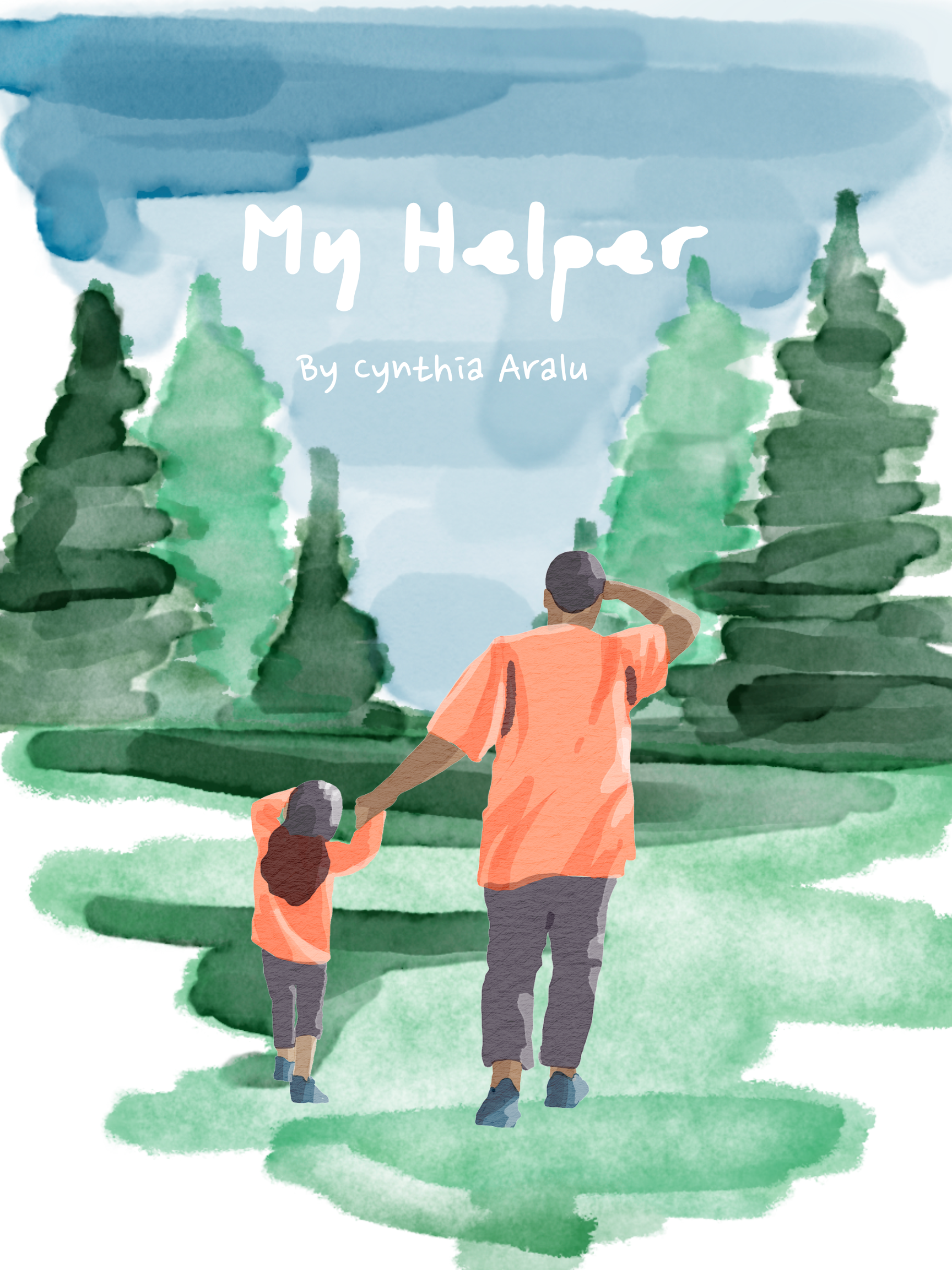
My Helper

By Cynthia Aralu

I lift up my eyes to the hills.
From whence does my help come?
My help comes from the Lord,
Who made heaven and earth.

He will not let your foot be moved,
    He who keeps you will not slumber.
Behold, He who keeps Israel
    will neither slumber nor sleep. 

The Lord is your keeper;
    the Lord is your shade on your right hand.
The sun shall not smite you by day,
    nor the moon by night.

Psalm 121:1-6

Hi everyone! Pray the Rosary.

For most of the time I have written, which is a good chunk of my life, whenever I set out to write, I have allowed my emotions to drive me. Sometimes, I had written after a chance inspiration by a body of work which I found to be inspiring and other times, I wrote from my place of interacting with the things and the people in my life. I don’t think I have really included God in my writing process, at least not until recently, when I began writing about God; then I started praying before writing. I did this because I got nervous about writing the wrong things about God or leading people astray.

I did some introspection after my poem, “Hey Mom” was refined by my younger brother. The experience left me feeling a bit shaken for some days. I realized on looking back on the poem I wrote about “Expected Endings”; I had been purely driven and guided by churning emotions. I believe most of what I have considered “some of my best works” have usually been produced this way. Even as I put the arrangement together for “Expected Endings” up on my blog, I did not pray since I was not directly mentioning God on the post. I seemed to have separated my work from God in doing this. As if to say, “Now, I get to post something of mine since I have posted everything else I wanted to post about God.” Actually, my thought process was exactly this.

Before or while writing the poem “Hey Mom”, I had said a prayer to God for His help to write well. I felt nothing as I wrote but I tried to refine the poem as best as I could on my journey home from the church. I posted the poem on my blog late at night but sent off a copy separately to my younger brother for his feedback. I suppose I wasn’t expecting anything major from him, but when I woke I up and picked up my phone, I saw his replies. We had a back and forth on my way to work, as I did not fully grasp what he was getting at. Understanding of his point of his view hit me, from seeing what his refinements were, just as my bus halted at the bus stop. I teared up in reaction to this assent of my mind to his creative genius, as I alighted from the bus; a reaction stemming entirely from a strong wave of inadequacy which washed over me and nothing more.

Logical or not, that feeling of inadequacy which had labelled me a horrible writer might have been, I cannot say. I can say however, that by the time I arrived at my office, I pondered on the fact that I had prayed to God for His help to write a good poem, but His help had come through my brother. I think I was rattled majorly because His help did not come in the form I had expected it. I literally want God to show up in dazzling ways through me, but He does not want me to be alone, so, He shows me the bar of my limitations, urging me to lean on the strength he has supplied to others, to surpass my limits.

So, I prayed to Him to send me a helper for a petition I have been making for a while now. 

This experience made me realize three things: (1) God does not want me to be alone, (2) God will use the people or whatever it is He has sent into my life to help me whether or not they realize it or even want to help me and (3) I do not want to keep my writing separate from God.

I will figure this writing thing out with God because my help comes from the Lord, Who made heaven and earth.

Thank you for reading today’s post. Remember to like this post and share it with your friends if you enjoyed it. Follow me on my blog, Katmira’s blog or my podcast, Amara’s Musings, to receive notifications whenever I have a new post. You can also subscribe below to get an email notification whenever a new post is out. This is particularly helpful if you don’t have a WordPress account.

Pray the Rosary. Let it be, until we meet again or “Ka ọ dị” as it is said in Igbo.

A lovely song to listen to!

Good

By Cynthia Aralu

Hi everyone! Pray the Rosary.

Moments ago, I opened my Spotify and I got a creepy looking pop up on my screen: “Song Psychic. What areas of your life do you need answers to: Love, career, etc.”. I don’t recall all of the options. I should have taken a screen shot but I cancelled it as fast as I could and said, “God forbid”, as I imagined someone else going along with this and then possibly being suggested music in the genre of their sadness. On the one hand, this new addition to Spotify could be completely harmless algorithm, on the other hand, too many sinister things go on in this world without people being aware and one must be vigilant. Who knows what goes on behind the build of that new attraction. I must admit, in the past, I would have clicked on this without thinking too much about it. It is not like I believed in the predictions. It only seemed fun to me in the past. The thing is you open yourself up to harmful spirits when you dabble in new age practices. Thank God if you leave unscathed physically but what of your soul’s health.

I was going to write about something else entirely different while I listened to music on Spotify, but I guess this is the thing to write about.

Many people do not realize the danger they expose themselves to when they dabble in New Age Practices. It is portrayed as something good in the media and there is often no physical repercussion so people cannot perceive the gravity behind their actions. Sometimes, it can even affect mental health and it is labelled as a psychological disorder. This is not to say all mental illness is spiritual. There are some that aren’t and there are some that are. I know this because I remember once feeling depressed and I did not want to move from where I sat, I could not, and I felt like I was suffocating in the heaviness in my soul. I made a small, quiet and unsure prayer to God, “Father help me”. The darkness dissipated and the heaviness left me as soon I uttered those words. This was a period I did not believe in God. I was desperate to be saved. Now, I know The Holy Spirit must have been helping me to pray. This experience made me believe God must be real. I even spoke to a colleague about it because I was dazed about the experience. She seemed upset that I was telling her about it. Around that time, I had been consuming so much Tarot Card readings on YouTube and I told her about it and that was okay. My awareness of the realness of God did not even snap me back to re-orient my life completely to God. It just made me consider just how real He is.

Another time, it was like a deep sadness, and I thought it good practice to remind myself of happy memories, to bring back my happiness. I could not remember even one happy memory. One thing that stood out to me though was Christ’s resurrection. It holds so much weight and power in meaning and being. I thought, “Christ is risen”, and I was restored. So, I said it continuously on my walk to work.

I have done a lot of foolish things in my life. I am just now starting to see sin as foolishness because it is not worth the cost when you do the math. There is the eternal consequence of course but I have never been the type to peer too deeply at the future. I just mean it is such an inconvenience to choose evil. My conscience condemns me. I know God sees me. And then I feel really bad about falling short. When I feel bad, I will apologise to God and then head to the confessional. I am thankful to God for the gift of confession but feeling horrible is not something I would want to walk into knowingly. I know the feeling is there for a good reason though. My anticipation of it serves as a deterrent when I consider what action to take. So, I end up thinking I might as well do good and have peace and joy in God.

I will not always want to do good. Sometimes, I will want evil, even knowing that it is not good for me, and the only reason that can bring me to choose the good will be because of God. I will do good through Christ Who strengthens me. If I were perfect, I would always want the good, but I know my imperfection and my limitation, in that, I can do no good apart from God.

Oh, I landed right into what I wanted to write about. “Doing Good because of God”. That is funny.

I was told recently that when I said, “I will do it because of God”, I say that to make myself feel good. Perhaps I do feel good when I say it, but it is also my reality when it is hard to choose good. I don’t believe it to be any less virtuous because I don’t believe I could do it if not because of God, even though I know it to be good, even though I feel good even after doing it. So, I cannot say I do good because of good’s sake or because I want it. I do it for love of God and I will do it well with God’s help. It does not mean it is a burden either. It brings me happiness when I do it, because it pleases God, and it is for my own good. What can I say, I am a complicated human being.

Thank you for reading today’s post. Remember to like this post and share it with your friends if you enjoyed it. Follow me on my blog, Katmira’s blog or my podcast, Amara’s Musings, to receive notifications whenever I have a new post. You can also subscribe below to get an email notification whenever a new post is out. This is particularly helpful if you don’t have a WordPress account.

Pray the Rosary. Let it be, until we meet again or “Ka ọ dị” as it is said in Igbo.

Have a listen! It sounds playful.

One of Us

By Cynthia Aralu

Hello everyone! Pray the Rosary.

When you hear the scripture and people speak about Jesus and say, “He was one of us”, do you ever wonder what that really means?

The bible said He suffered and was tempted in every way, yet without sinning, and as such is able to sympathize with our weakness. This, He did all in the service of God, so that He may atone for our sins, through His sacrifice of Himself. So, we should have no fear, but be confident to draw close to the throne of grace, and in doing so, we will find mercy and the grace which will help us in our time of need.

I suppose when I have thought of Jesus, even after hearing that He was just like us in every way apart from sin, I have hated any depiction of Him that to my mind was less dignified. I have heard it said that on the cross He felt abandoned when He said, “Father, Father, why have You forsaken me?”. I think maybe to my mind, I interpreted that to mean that He believed He was abandoned, or perhaps I have heard it said as much. My memory is all jumbled up. Either way, I know Jesus is God, so I could not accept that He did not know that The Father was with Him. It was an imperfection that I just could not allow myself to believe. I suppose a part of me felt He found temptation easier, because He is God. I am not proud of that thought.

Today, I think I see things a little different and have another understanding of that moment when He said that. Partly because I have felt this before, but not even close to the degree to which He did, and also partly because, I heard someone say today, “He felt abandoned” and it finally clicked; “He felt”. So, this is only a feeling or emotion; the same emotion that people, including myself, have allowed to distort their grasp of the truth and then have fallen into sin. I say “only an emotion” not to belittle the strength of His emotions, but only to delve into the immensity of His emotions and to say, “what excellent will power, that he was able to hold on to the truth when He felt immense darkness, rejection and abandonment”. And that is only partly His emotional pain, not to talk of His physical suffering as He hung on the cross.

Perhaps it makes sense to me now because I know it is possible to feel an emotion which is at war with the truth of a situation which I am aware of 100%. It is the complexity of the Human situation and Jesus fully went through the human experience.

I believe while He felt abandoned, He knew His Father to be present and when He said that prayer from Psalm 22, “My God, My God, why have You forsaken Me”, in one way, He was uniting Himself to our suffering, our pain and our despair.

He was one of us.

I am sure this prayer also meant other things. Reading the Psalm will give you an idea, considering the suffering He went through, but I suppose, that other meaning, although equally important, is not the focus of what I am writing.

Following the prayer I mentioned above, He said another prayer just before He died, “Father, into Thy Hands, I commend My Spirit”, which spoke of trust in His Father to take care of Him and preserve Him. And God did preserve Him. He was raised from the dead by the Spirit of God and is now seated at the right hand of The Father, interceding for us. And the same Spirit of God which raised Him from the dead, dwells in all baptized Christians.

It would seem to me that He started off and lived His human life entrusting Himself to God and entrusting Himself to others. He entrusted Himself to the care of Mary and Joseph. He entrusted Himself to the 12 He chose, even knowing that Judas would betray Him. Man, He trusted. I do not know if I could trust people like that but maybe it is a call to entrust oneself to others. I do not know. I am only trying to see people through His Eyes, which are unjaded. I wonder if this would lead to more trust.

I am not a theologian, I might not be accurate in my understanding. In fact, I believe that there is so much that I do not know. I am only seeking understanding and contemplating God. If the answers never come, I am fine with it. There is a knowledge that leads to pride and destruction anyway. But, if you want to hear from people who have studied Theology, Ascension Presents has a couple of them.

Thank you for reading today’s post. Remember to like this post and share it with your friends if you enjoyed it. Follow me on my blog, Katmira’s blog or my podcast, Amara’s Musings, to receive notifications whenever I have a new post. You can also subscribe below to get an email notification whenever a new post is out. This is particularly helpful if you don’t have a WordPress account.

Let it be, until we meet again or “Ka ọ dị” as it is said in Igbo.

A lovely song to listen to!